Saturday, October 17, 2026

How to Increase Your VA Disability Rating: A 2026 Guide

Table of Contents

Last Updated: October 12, 2026

How to Increase Your VA Disability Rating: What You Need to Know

If your service-connected condition has worsened, you can request an increased VA disability rating. The evidence should show your current symptoms, their severity, and how they affect your work and daily activities. A higher rating depends on whether the evidence meets the applicable rating criteria.

Before filing, consider whether your condition has worsened or whether you disagree with a previous rating decision. These situations may call for different procedures. A claim for an increase addresses worsening, while an appropriate decision review can challenge an earlier decision.

This guide explains the evidence commonly used for an increase, how to apply, how combined ratings work, and what to know about possible rating reductions.

Step 1: Gather Strong VA Increase Claim Evidence

Start by identifying evidence that shows how your service-connected condition has worsened. Useful evidence may include treatment records, examination findings, symptom logs, and statements describing changes in your ability to work and manage daily activities.

You do not necessarily need every record in hand before filing. If you need time to gather evidence, an intent to file may help preserve a potential effective date, provided you complete the application within the applicable deadline.
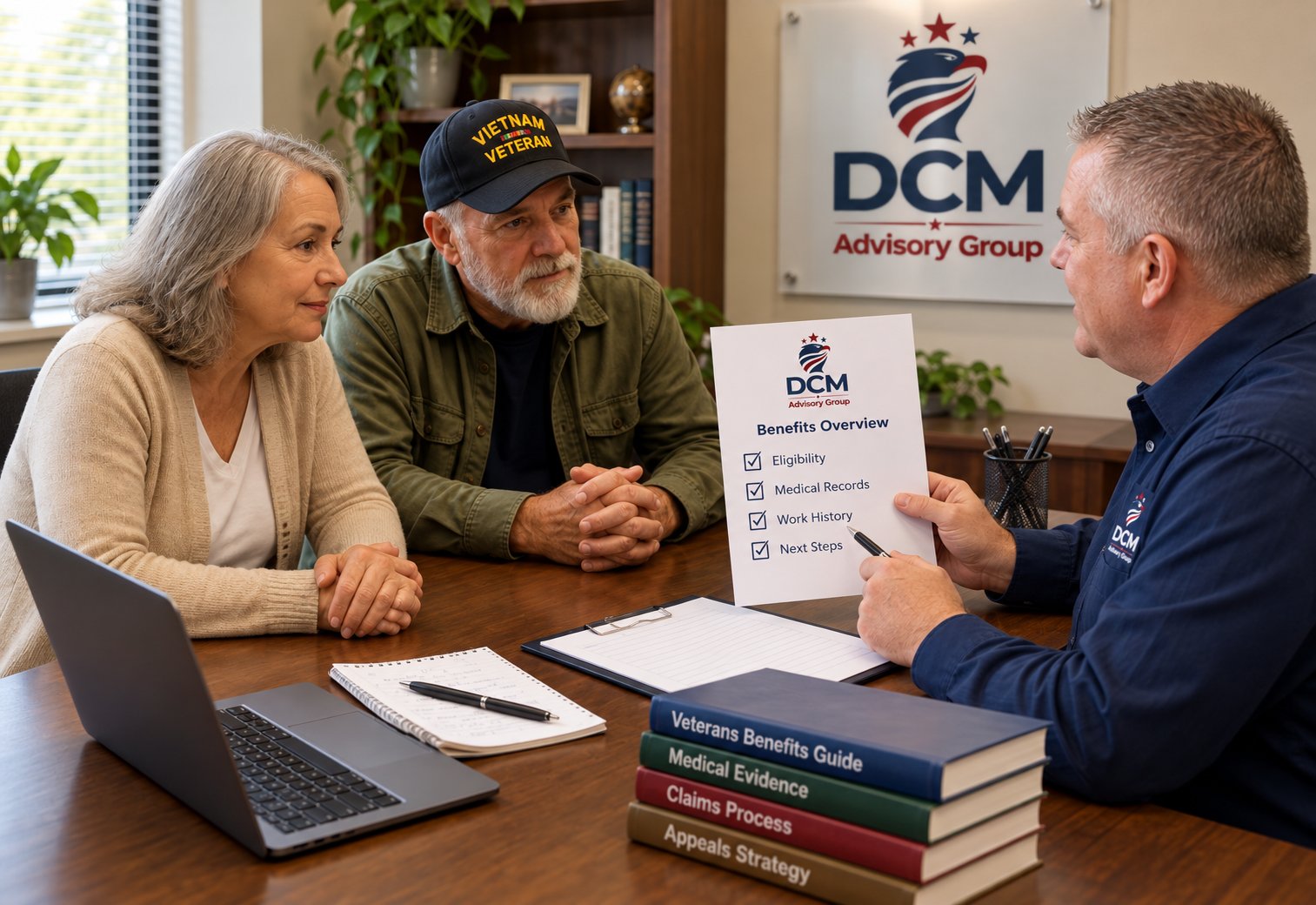
Article image

Medical Records Showing Worsening Symptoms

For an increase involving an already service-connected condition, the focus is generally on its current severity. You usually do not need a new nexus letter proving the connection to military service again.

Gather relevant treatment notes, test results, and examination findings. Depending on the condition, helpful details may include symptom frequency, flare-up duration, limitations in movement, missed work, and assistance needed with daily activities. A provider-completed Disability Benefits Questionnaire may also help document the findings VA uses to evaluate your condition.

Buddy Statements and Lay Evidence

Buddy statements are written accounts from people who see how your condition affects you. A spouse, a fellow veteran, or a coworker can describe changes in your daily life. The VA accepts these as lay evidence, and they can fill gaps that medical records miss.

Keep each statement focused on what the person actually observes. "He can't stand for more than a few minutes without sitting down" beats "he seems to be struggling." Details beat feelings.

Pro TipAsk your healthcare provider to document your actual symptoms, examination findings, and functional limitations. Clear examples and medical explanations are more useful than simply repeating words from the rating criteria. Describe typical days and flare-ups accurately, including how often they occur and how long they last.

Step 2: File VA Form 21-526EZ for Increased Compensation

You can request an increased evaluation using VA Form 21-526EZ, Application for Disability Compensation and Related Compensation Benefits, or VA’s online disability application. Clearly identify the service-connected condition or conditions for which you are requesting an increase.

Helpful supporting information may include:

  • Medical records showing current severity or worsening.
  • A personal statement describing symptoms and functional limitations.
  • Statements from people who have observed changes.
  • Relevant private treatment records or authorization for VA to request them.
  • The locations and dates of relevant VA treatment.

Submit available supporting evidence promptly and keep copies of your application and documents. You can also ask a VA-accredited representative for assistance.

Step 3: Understand the VA Disability Rating Increase Timeline

Processing times vary based on the evidence needed, examinations, the number of conditions claimed, and VA’s workload. A complete submission can reduce requests for missing information, but it does not guarantee a particular decision date.

Track your claim through VA.gov, respond promptly to requests, and attend any scheduled examinations. Contact VA or your accredited representative if you need clarification about a request or your claim’s status.

Watch OutIf an increase request for a condition is already pending, submit additional supporting evidence to that pending claim rather than filing a duplicate request. If you disagree with a decision VA has already issued, review the available decision-review options and deadlines.

How the VA Calculates Combined Disability Ratings

The VA does not simply add your percentages together (About Disability Ratings). It uses a combined rating formula that applies each new condition to what is left of your "whole person." This is why two 50% ratings do not equal 100%.

Here is how the math works in plain terms:

Ask About Our Services →

Step

What Happens

Example

Start

Begin with 100% available

100%

First condition

Subtract its rating

50% off leaves 50%

Second condition

Apply to the remainder

50% of 50% = 25%

Add together

Combine the reductions

50% + 25% = 75%

Round

Round to the nearest 10

75% rounds to 80%

VA generally combines individual evaluations from highest to lowest using its Combined Ratings Table. Special rules, including the bilateral factor when applicable, can affect the calculation. After the evaluations are combined, VA rounds the final combined value to the nearest 10%, with values ending in 5 rounded upward. An individual rating increase may not change your rounded combined rating or monthly payment.

Can a VA Rating Reduction After an Increase Request Happen?

A rating reduction is possible during VA’s review, but requesting an increase does not automatically reopen every service-connected evaluation. Any reduction must meet the applicable legal requirements, including protections that may apply to longstanding ratings.

For certain ratings maintained for five years or more, additional stabilization requirements apply. An evaluation continuously maintained for 20 years generally cannot be reduced below its protected level except upon a showing of fraud.

When a proposed reduction would decrease compensation payments currently being made, VA generally must provide advance notice and an opportunity to respond. Under these procedures, you have 30 days from the notice to request a predetermination hearing and 60 days to submit evidence against the reduction. Follow the instructions in the notice carefully.

Common Mistakes That Hurt Your VA Disability Rating Increase

An effective increase request explains what has changed and provides evidence of the condition’s current severity. Common mistakes include:

  • Describing symptoms without explaining their frequency, duration, or effects.
  • Leaving out limitations during flare-ups or after repeated activity.
  • Failing to identify relevant treatment records.
  • Missing scheduled examinations without promptly explaining the circumstances.
  • Assuming that worsening automatically qualifies for the next rating level.
  • Filing an increase when you disagree with an earlier decision that may require a review.

Describe your condition honestly and consistently. Include specific examples of how it affects work and daily activities, and respond to VA requests promptly.

Conclusion: Your Next Steps for a VA Disability Rating Increase

If your service-connected condition has worsened, start by documenting your current symptoms and their effects on your life. Confirm the appropriate filing process, identify relevant records, and keep copies of what you submit.

DCM Advisory Group is a veteran-owned business providing general educational information about VA benefits and publicly available resources. DCM is not VA-accredited or affiliated with the Department of Veterans Affairs. For assistance preparing or pursuing an individual VA claim, veterans can contact a VA-accredited VSO representative, claims agent, or attorney. The VA can reduce your rating after you request an increase

Frequently Asked Questions

How do I request an increase in my VA disability rating?

Request an increase using VA Form 21-526EZ or VA’s online disability application. Identify the service-connected condition that has worsened and submit or identify supporting evidence. If you disagree with an earlier rating decision, consider the appropriate decision-review process instead.

What evidence do I need to support a VA rating increase?

Useful evidence includes current medical findings, treatment records, symptom logs, and statements describing increased severity and functional limitations. For an already service-connected condition, a new nexus letter is generally unnecessary. VA may schedule a C&P examination if additional information is needed.

Can a VA rating increase request lower my current rating?

A reduction is possible, but it must satisfy applicable legal requirements and rating protections. When proposed-reduction procedures apply, the deadline to request a predetermination hearing is 30 days from the notice, while the evidence-response period is 60 days. A final reduction decision carries separate decision-review rights and deadlines.

How long does a VA disability rating increase claim take?

Processing times vary with the claim’s complexity, required records, examinations, and VA’s workload. Check VA.gov for current processing information and your claim status. Submit available evidence promptly, respond to requests, and attend scheduled examinations. No particular processing time is guaranteed.


Saturday, October 10, 2026

VA Combined Disability Rating Calculator Explained

Table of Contents

Last Updated: October 9, 2026

How the VA Combined Disability Rating Calculator Works

The VA combined disability rating calculator explained simply: it takes your individual ratings and combines them using a formula that never adds straight up. If you have a 50% rating and a 30% rating, your combined rating is not 80%. It is 65%, which rounds to 70%.

That surprises almost every veteran we talk to at DCM Advisory Group. In Joplin, MO, and across the country, veterans assume ratings stack. They do not.

The VA uses a "whole person" method. Each new condition applies to what is left of you, not to the full 100%. Here is the core idea:

  • Start with your highest rating
  • Subtract it from 100 to find what remains
  • Apply the next rating to that remaining amount
  • Repeat for every condition
  • Round the final number to the nearest 10%

The official tool for this is the VA combined ratings table, published by the Department of Veterans Affairs. You can also run the math yourself with a calculator or a free online tool.

This guide walks through the table, real examples, the bilateral factor, rounding rules, and the mistakes that cost veterans the most.

Reading the VA Combined Ratings Table

The VA combined ratings table is a grid. One axis lists your first rating. The other axis lists your second. Where they meet, you find the combined value.

Say you have a 40% rating and a 20% rating. Find 40 on one side, 20 on the other. The table gives you 52. That is your combined value before rounding.

The table works in steps:

  1. Combine your two highest ratings first
  2. Take that result and combine it with your next rating
  3. Keep going until every condition is included
  4. Round the final number

If you have several rated conditions, write down each table result before moving to the next rating. This makes it easier to follow the calculation and avoid skipping a condition.

This table exists because the VA math is not intuitive. Seeing it laid out makes the process easier to trust.

VA Disability Math Examples: Walking Through Real Calculations

Article image

A veteran sitting at a kitchen table with a notebook, pen, and printed VA rating decision letter, working through numbers with a calculator nearby

Numbers make more sense with examples. Here are two common VA disability math examples.

Example 1: Two conditions, 50% and 30%

  • Start with 50%. That leaves 50% of the whole person.
  • Apply 30% to the remaining 50%. That adds 15 points.
  • Combined total: 65%.
  • Round to the nearest 10%: 70%.

Example 2: Three conditions, 60%, 40%, and 20%

  • Start with 60%. Remaining: 40%.
  • Apply 40% to 40%. That adds 16 points. Running total: 76%.
  • Remaining: 24%. Apply 20% to 24%. That adds about 5 points.
  • Combined total: 81%.
  • Round to the nearest 10%: 80%.

Notice how a 60, 40, and 20 never reaches 100. That is the whole point of the system. Each condition only touches what is left over.

Run your own numbers the same way. List every rating from highest to lowest. Work down the list one step at a time.

VA Bilateral Factor Explained: When it applies.

The bilateral factor is an adjustment for qualifying compensable service-connected disabilities affecting both arms, both legs, or paired skeletal muscles. It does not apply simply because conditions affect both sides of the body.

The disabilities do not have to affect matching joints. For example, a compensable right knee disability and a compensable left ankle disability can qualify. Two disabilities affecting only the right leg do not qualify on their own.

VA combines the qualifying ratings first, then adds 10% of that combined value. The subtotal is treated as one disability and placed in order of severity with the remaining ratings.

For example, separately rated right and left knee disabilities at 10% each combine to 19%. The bilateral factor adds 1.9 percentage points, producing 20.9%, which is treated as 21% for further table combinations.

VA also applies an exception when excluding one or more disabilities from the bilateral-factor calculation produces a more favorable combined evaluation. The bilateral factor does not always change the final rounded rating.

Schedule a Free Educational Consultation →

How VA Rounds Combined Disability Ratings

VA uses the Combined Ratings Table to combine ratings one at a time. After each combination, use the whole-number value shown in the table for the next calculation. Do not carry unrounded decimal results through the entire calculation.

Do not round intermediate results to the nearest 10%. That conversion happens only after all ratings have been combined.

The final combined value is converted to the nearest multiple of 10. Values ending in 5 round upward. For example, 84% becomes 80%, while 85% becomes 90%.

Watch OutRounding an intermediate result to the nearest 10% can produce an incorrect final rating. Use each table result until the calculation is complete.

Why VA Combined Ratings Don’t Add Together

VA combines individual ratings using the whole-person method rather than adding the percentages together.

Here is the math in plain terms:

  • 50% + 30% = 65% (not 80%)
  • 70% + 40% = 82% (not 110%)
  • 90% + 50% = 95% (not 140%)

A final combined value of 95% or higher rounds to a 100% schedular rating. Multiple disabilities can therefore produce a final combined rating of 100%. www.va.gov

Separately, qualifying veterans may receive compensation at the 100% rate through Individual Unemployability, even when their schedular rating is lower.

Common Mistakes Veterans Make With Combined Rating Math

The biggest mistake is assuming ratings add. Once you accept that they combine, the rest gets easier.

Other errors we see often:

  • Rounding to the nearest 10% too early. Use each whole-number table result for the next combination. Convert to the nearest 10% only at the end.
  • Overlooking the bilateral factor. Check whether your compensable service-connected disabilities meet the requirements.
  • Leaving out evaluations. Include each separately assigned service-connected evaluation applicable to the period you are checking. A 0% evaluation does not increase the combined percentage.
Pro TipList your service-connected conditions, assigned percentages, and effective dates before checking the calculation. Use the evaluations that apply to the same period.

If the numbers still do not match your decision letter, that is a signal worth acting on. DCM Advisory Group is a veteran-owned business in Joplin, Missouri, providing general education about veterans’ benefits, including rating percentages and the sections of a VA decision letter. We are not affiliated with or endorsed by the Department of Veterans Affairs. Our VA educational services do not include preparing, presenting, or prosecuting VA claims or appeals. Don Means’ Social Security non-attorney representation is a separate service and does not confer VA accreditation.

Frequently Asked Questions

How does the VA calculate a combined disability rating?

VA uses the Combined Ratings Table rather than adding individual percentages together. For example, 50% and 30% combine to 65%, which rounds to a final rating of 70%. With additional ratings, use each whole-number table result for the next combination, then convert the final result to the nearest 10%.

How does the VA bilateral factor work when I have conditions on both sides?

The bilateral factor applies to qualifying compensable service-connected disabilities affecting both arms, both legs, or paired skeletal muscles. VA combines the qualifying evaluations and adds 10% of that value. Two qualifying 10% evaluations combine to 19%; adding 1.9 produces 20.9%, treated as 21% for further table combinations. VA applies an exception when excluding one or more disabilities from the bilateral calculation produces a more favorable combined evaluation.

Why don't my VA disability ratings add up to the percentage I expected?

VA combines ratings using the whole-person method, so each additional rating applies to the remaining percentage in the calculation. For example, 50% and 50% combine to 75%, which rounds to a final rating of 80%. Use the official Combined Ratings Table and check whether the bilateral factor applies.

Can a VA combined rating be lower than the sum of my individual ratings?

Yes. For example, evaluations of 30%, 20%, and 10%, without a bilateral factor, produce a final combined rating of 50%, rather than 60%. This difference results from VA’s combined-rating method and does not, by itself, indicate an error.


VA math can feel like it is working against you, especially when a stack of ratings lands far below what you expected. You do not have to sort it out alone. At DCM Advisory Group, we offer veteran-owned guidance, clear educational advice on the claims process, and support that helps you make informed decisions about your benefits. Get started with DCM Advisory Group and a free consultation to see where your combined rating really stands.

Wednesday, October 7, 2026

VA Disability Claims Process: Step-by-Step Guide

Table of Contents

Last Updated: October 7, 2026

VA Disability Claims Process: A Step-by-Step Walkthrough

The VA disability claims process allows veterans to apply for tax-free compensation for disabilities connected to military service. At DCM Advisory Group, we help veterans understand the process and their decision letters. This walkthrough groups preparation, filing, examinations, and the decision into four practical steps. VA’s online claim tracker shows eight processing steps after filing, and a claim may return to evidence gathering when it needs additional information.

Infographic flowchart illustrating the step-by-step process for filing VA disability claims at a home workspace.

A veteran sitting at a kitchen table with a laptop, a stack of medical records, and a pen, reviewing VA forms in a bright home setting

Step 1: Protect Your Potential Effective Date and Gather Evidence

If you need time to prepare your claim, consider submitting an intent to file before gathering records. This can preserve a potential earlier effective date if benefits are awarded. You generally have one year after submitting an intent to file to complete and submit your claim.

Gather or identify relevant service treatment records, VA and private medical records, and statements describing your symptoms and their effects. VA can help obtain certain records when you provide the necessary information and authorization.

The evidence needed depends on your claim. Direct service connection generally requires a current disability, an in-service event, injury, or disease, and a link between them. Presumptive claims have specific condition and service requirements. Secondary claims require evidence that a service-connected disability caused or aggravated another condition. For an increased rating, the evidence should show that an already service-connected disability has worsened.

Step 2: Submit Your Claim Using VA Form 21-526EZ

Use VA Form 21-526EZ to apply for disability compensation for new conditions or to request an increased rating for an already service-connected condition. You can submit your application online, by mail, or in person.

List the conditions you want VA to consider and submit or identify supporting evidence. Keep a copy of your application and your submission confirmation.

The Fully Developed Claims program supports faster processing when you submit the required evidence with your claim, but it does not guarantee a faster decision or approval. If you are challenging a previous denial, a Supplemental Claim or another decision review option may be appropriate instead.

Step 3: Attend Any Requested C&P Exams and Respond to VA

VA may request a Compensation and Pension examination, commonly called a C&P exam, to gather information about your condition, its connection to service, or its severity. Not every claim requires an examination.

If VA schedules an exam, attend it even if your own doctor has already diagnosed your condition. If you cannot attend, contact the scheduling office promptly to request rescheduling.

Describe your symptoms honestly and accurately, including typical days and flare-ups. Explain their frequency, severity, duration, and effects on work and daily activities. Do not minimize or exaggerate your symptoms.

Monitor your claim and respond to VA requests by the stated deadlines. Missing an exam or failing to provide requested information can affect the decision.

Step 4: Review Your Decision and Understand Your Options

Read your decision letter carefully. Check which conditions were granted, denied, or deferred, along with any assigned ratings, effective dates, and reasons for the decision.

When you have multiple service-connected disabilities, VA combines the ratings using its formula rather than simply adding them. Your combined rating helps determine your monthly compensation.

If you disagree with a decision, available options may include a Supplemental Claim, Higher-Level Review, or an appeal to the Board of Veterans’ Appeals. A Supplemental Claim generally requires new and relevant evidence. Higher-Level Review considers the existing record and does not accept new evidence.

For most initial disability compensation decisions, you have one year from the date on the decision letter to request Higher-Level Review or a Board Appeal. A Supplemental Claim can generally be filed later, but filing within one year can help preserve the potential effective date. Review the instructions in your decision letter before choosing an option.

Key TakeawayA strong claim starts with understanding the evidence requirements for your particular situation. Protect your potential effective date, submit or identify relevant evidence, attend requested examinations, and track deadlines. Direct, presumptive, secondary, and increased-rating claims have different requirements, so the same checklist does not apply to every condition.

VA Disability Claim Evidence: What You Need to Prove Service Connection

Service connection means VA recognizes a disability as connected to military service. For direct service connection, evidence generally must establish a current disability, an in-service event, injury, or disease, and a link between them. Other claim types have different requirements.

Relevant evidence may include service records, medical records, and personal or witness statements. You don't need a separate private nexus letter for every claim. Depending on the circumstances, existing records, a VA medical opinion, or an applicable presumption may support the link.

Evidence Checklist by Claim Type

Claim Type

Relevant Evidence

Purpose

Direct service connection

Current disability, in-service event, and supporting link

Establishes connection to service

Secondary condition

Current condition and evidence of causation or aggravation by a service-connected disability

Establishes secondary connection

Increased rating

Evidence of worsening and functional limitations

Supports a higher evaluation

Presumptive condition

Medical evidence and qualifying service records

Establishes the applicable presumption’s requirement

The VA's evidence requirements guide explains what counts as acceptable proof. A common mistake is submitting a diagnosis without a nexus.

VA Disability Claim Timeline: What to Expect and How to Track It

Processing times vary by claim type, complexity, and the evidence VA needs. VA publishes an updated average processing time, but that average does not predict when an individual claim will finish. Submitting complete, relevant evidence can help avoid preventable delays, but it does not guarantee a faster decision.

How to Monitor Your Claim Status Online

Check your claim through VA.gov or the VA: Health and Benefits mobile app. VA’s disability claim tracker uses eight steps, from claim received to claim decided. A claim may return to evidence gathering if it needs additional evidence or clarification.

A lengthy stay in one step does not, by itself, identify the cause of a delay. Review available letters and requests, and respond by the stated deadlines.

Pro TipKeep copies of submitted documents and any upload confirmations. These records can help you follow up if you have questions about whether VA received something.

VA Disability Claim Checklist: Forms, Records, and Documentation

Before filing, check that you have:

  • The correct application or decision review form
  • Relevant service and medical records, or information enabling VA to obtain them
  • Supporting statements or medical opinions, where applicable
  • Any additional forms required for your particular claim
  • Copies of your submission and confirmation

Not every claim requires every document.

The VA’s disability claim filing guide lists the current required forms and filing options.

FREE Consultation →

VA Disability Claim Denied: Understanding Your Review Options

A denial does not necessarily end your claim. Read the decision letter to understand VA’s reasons, favorable findings, and review instructions.

Depending on your decision, available options may include:

  1. Supplemental Claim: Submit or identify new and relevant evidence. Certain reviews based on a change in law may also qualify.
  2. Higher-Level Review: Request another review of the existing record. You cannot submit new evidence in this lane.
  3. Board Appeal: Request review by a Veterans Law Judge. Evidence rules depend on the Board option you choose.

Choose the option that addresses the reason for the denial. No review lane is automatically the fastest or best for every case.

For most initial disability compensation decisions, Higher-Level Review and Board Appeal requests must be submitted within one year of the decision letter. Supplemental Claims can generally be filed later, but filing within one year can help preserve the potential effective date.

Watch OutSimply submitting another initial application for a previously denied issue is generally not the correct way to challenge that denial. Follow the decision review instructions and applicable deadlines.

VA Disability Claims Process: Keeping Your Evidence Organized

Focus on evidence that addresses the requirements of your claim. Relevant records, clear statements, and well-supported medical opinions can help explain your situation. The number of pages alone does not determine a claim’s strength.

Keep copies of your records, track deadlines, and respond promptly to VA requests. Preparation can reduce avoidable problems, but it cannot guarantee approval or eliminate every delay.

DCM Advisory Group is a veteran-owned firm providing educational guidance to help veterans understand benefits information, decision letters, and combined ratings. Keep copies of your records, track deadlines, and respond promptly to VA requests. Preparation can reduce avoidable problems, but it cannot guarantee approval or eliminate every delay.

DCM Advisory Group is a veteran-owned firm providing educational guidance to help veterans understand benefits information, decision letters, and combined ratings.

Conclusion: Your Next Steps in the VA Disability Claims Process

Identify your claim type, review the applicable evidence requirements, and submit or identify relevant supporting records. If you disagree with a decision, review your options and deadlines carefully.

DCM Advisory Group offers a free consultation to help you better understand your benefits and what to address next.

Frequently Asked Questions

What evidence is generally needed for direct service connection?

Direct service connection generally requires evidence of a current disability, an in-service event, injury, or disease, and a link between them. A separate private nexus letter is not always required. Different requirements apply to presumptive conditions, secondary conditions, and increased-rating claims.

How long does the VA disability claims process take?

Processing times vary based on the type of claim, the number and complexity of conditions, and the evidence VA needs. VA publishes updated average processing times, but they are not guaranteed deadlines for your claim. Check your status through VA.gov or the VA: Health and Benefits mobile app, and respond to requests by the stated deadlines.

What should I do if the VA denies my disability claim?

Read your decision letter to understand why VA denied the claim and what review options are available. A Supplemental Claim generally requires new and relevant evidence. Higher-Level Review considers the existing record without new evidence. A Board Appeal allows review by a Veterans Law Judge, with evidence rules depending on the option selected. For most initial disability compensation decisions, Higher-Level Review and Board Appeal requests must be filed within one year of the decision letter. Filing a Supplemental Claim within one year can help preserve the potential effective date.

What evidence should I include with my VA disability claim?

Submit or identify relevant service records and medical evidence. Personal statements and statements from people who know about your symptoms or service events may also help. The evidence needed depends on whether you are claiming direct service connection, a secondary condition, a presumptive condition, or an increased rating. Medical opinions can help when a connection needs clarification, but a private nexus letter isn't required for every claim. VA can help obtain certain records when you provide sufficient information and any necessary authorization.

How to Increase Your VA Disability Rating: A 2026 Guide

Table of Contents How to Increase Your VA Disability Rating: What You Need to Know Step 1: Gather Strong VA Increase Claim Evidence Medical ...