Table of Contents
- How to Increase Your VA Disability Rating: What You Need to Know
- Step 1: Gather Strong VA Increase Claim Evidence
- Step 2: File VA Form 21-526EZ for Increased Compensation
- Step 3: Understand the VA Disability Rating Increase Timeline
- How the VA Calculates Combined Disability Ratings
- Can a VA Rating Reduction After an Increase Request Happen?
- Common Mistakes That Hurt Your VA Disability Rating Increase
- Conclusion: Your Next Steps for a VA Disability Rating Increase
- Frequently Asked Questions
Last Updated: October 12, 2026
How to Increase Your VA Disability Rating: What You Need to Know
If your service-connected condition has worsened, you can request an increased VA disability rating. The evidence should show your current symptoms, their severity, and how they affect your work and daily activities. A higher rating depends on whether the evidence meets the applicable rating criteria.
Before filing, consider whether your condition has worsened or whether you disagree with a previous rating decision. These situations may call for different procedures. A claim for an increase addresses worsening, while an appropriate decision review can challenge an earlier decision.
This guide explains the evidence commonly used for an increase, how to apply, how combined ratings work, and what to know about possible rating reductions.
Step 1: Gather Strong VA Increase Claim Evidence
Start by identifying evidence that shows how your service-connected condition has worsened. Useful evidence may include treatment records, examination findings, symptom logs, and statements describing changes in your ability to work and manage daily activities.
You do not necessarily need every record in hand before filing. If you need time to gather evidence, an intent to file may help preserve a potential effective date, provided you complete the application within the applicable deadline.
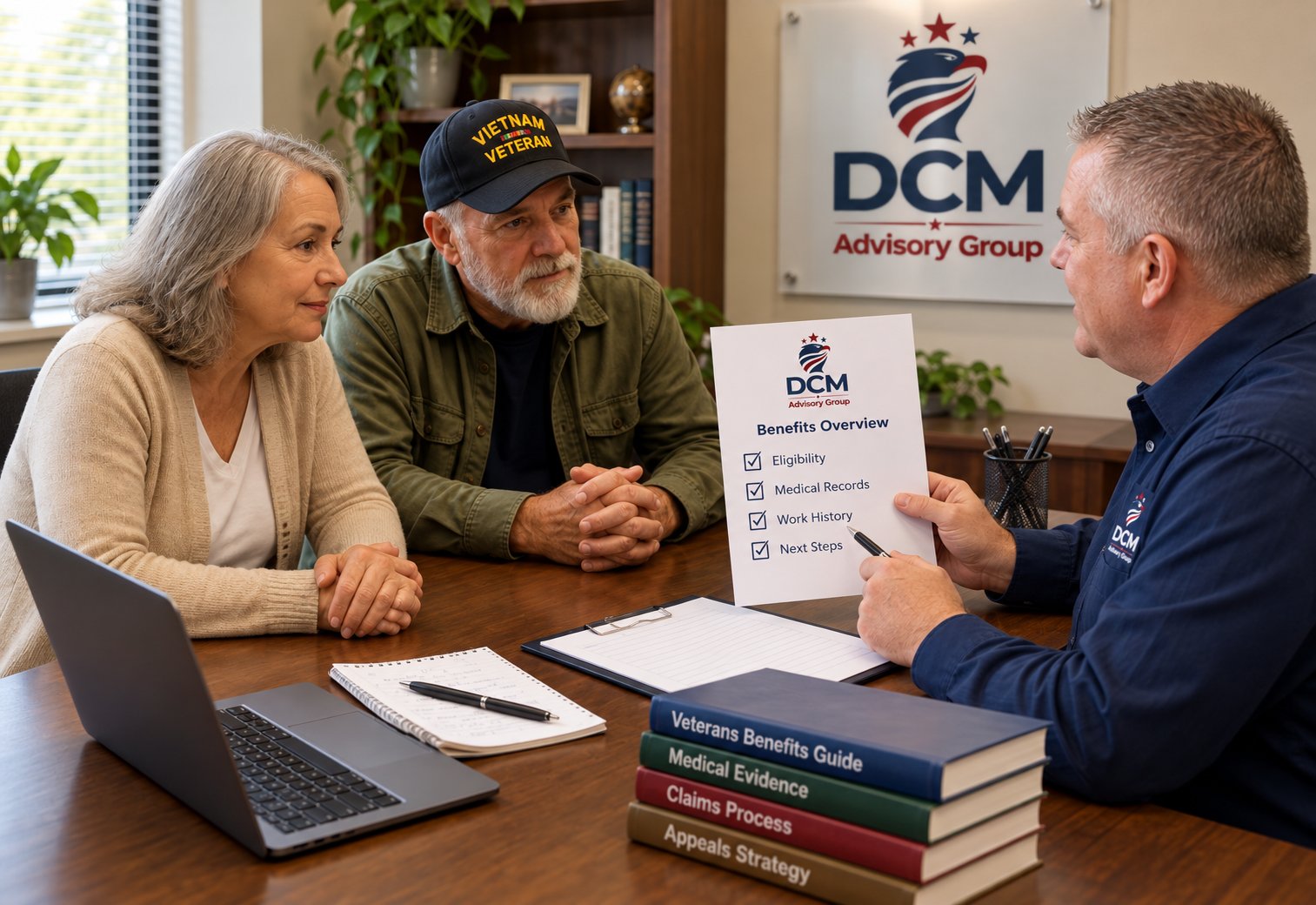
Medical Records Showing Worsening Symptoms
For an increase involving an already service-connected condition, the focus is generally on its current severity. You usually do not need a new nexus letter proving the connection to military service again.
Gather relevant treatment notes, test results, and examination findings. Depending on the condition, helpful details may include symptom frequency, flare-up duration, limitations in movement, missed work, and assistance needed with daily activities. A provider-completed Disability Benefits Questionnaire may also help document the findings VA uses to evaluate your condition.
Buddy Statements and Lay Evidence
Buddy statements are written accounts from people who see how your condition affects you. A spouse, a fellow veteran, or a coworker can describe changes in your daily life. The VA accepts these as lay evidence, and they can fill gaps that medical records miss.
Keep each statement focused on what the person actually observes. "He can't stand for more than a few minutes without sitting down" beats "he seems to be struggling." Details beat feelings.
Step 2: File VA Form 21-526EZ for Increased Compensation
You can request an increased evaluation using VA Form 21-526EZ, Application for Disability Compensation and Related Compensation Benefits, or VA’s online disability application. Clearly identify the service-connected condition or conditions for which you are requesting an increase.
Helpful supporting information may include:
- Medical records showing current severity or worsening.
- A personal statement describing symptoms and functional limitations.
- Statements from people who have observed changes.
- Relevant private treatment records or authorization for VA to request them.
- The locations and dates of relevant VA treatment.
Submit available supporting evidence promptly and keep copies of your application and documents. You can also ask a VA-accredited representative for assistance.
Step 3: Understand the VA Disability Rating Increase Timeline
Processing times vary based on the evidence needed, examinations, the number of conditions claimed, and VA’s workload. A complete submission can reduce requests for missing information, but it does not guarantee a particular decision date.
Track your claim through VA.gov, respond promptly to requests, and attend any scheduled examinations. Contact VA or your accredited representative if you need clarification about a request or your claim’s status.
How the VA Calculates Combined Disability Ratings
The VA does not simply add your percentages together (About Disability Ratings). It uses a combined rating formula that applies each new condition to what is left of your "whole person." This is why two 50% ratings do not equal 100%.
Here is how the math works in plain terms:
Step | What Happens | Example |
|---|---|---|
Start | Begin with 100% available | 100% |
First condition | Subtract its rating | 50% off leaves 50% |
Second condition | Apply to the remainder | 50% of 50% = 25% |
Add together | Combine the reductions | 50% + 25% = 75% |
Round | Round to the nearest 10 | 75% rounds to 80% |
VA generally combines individual evaluations from highest to lowest using its Combined Ratings Table. Special rules, including the bilateral factor when applicable, can affect the calculation. After the evaluations are combined, VA rounds the final combined value to the nearest 10%, with values ending in 5 rounded upward. An individual rating increase may not change your rounded combined rating or monthly payment.
Can a VA Rating Reduction After an Increase Request Happen?
A rating reduction is possible during VA’s review, but requesting an increase does not automatically reopen every service-connected evaluation. Any reduction must meet the applicable legal requirements, including protections that may apply to longstanding ratings.
For certain ratings maintained for five years or more, additional stabilization requirements apply. An evaluation continuously maintained for 20 years generally cannot be reduced below its protected level except upon a showing of fraud.
When a proposed reduction would decrease compensation payments currently being made, VA generally must provide advance notice and an opportunity to respond. Under these procedures, you have 30 days from the notice to request a predetermination hearing and 60 days to submit evidence against the reduction. Follow the instructions in the notice carefully.
Common Mistakes That Hurt Your VA Disability Rating Increase
An effective increase request explains what has changed and provides evidence of the condition’s current severity. Common mistakes include:
- Describing symptoms without explaining their frequency, duration, or effects.
- Leaving out limitations during flare-ups or after repeated activity.
- Failing to identify relevant treatment records.
- Missing scheduled examinations without promptly explaining the circumstances.
- Assuming that worsening automatically qualifies for the next rating level.
- Filing an increase when you disagree with an earlier decision that may require a review.
Describe your condition honestly and consistently. Include specific examples of how it affects work and daily activities, and respond to VA requests promptly.
Conclusion: Your Next Steps for a VA Disability Rating Increase
If your service-connected condition has worsened, start by documenting your current symptoms and their effects on your life. Confirm the appropriate filing process, identify relevant records, and keep copies of what you submit.
DCM Advisory Group is a veteran-owned business providing general educational information about VA benefits and publicly available resources. DCM is not VA-accredited or affiliated with the Department of Veterans Affairs. For assistance preparing or pursuing an individual VA claim, veterans can contact a VA-accredited VSO representative, claims agent, or attorney. The VA can reduce your rating after you request an increase
Frequently Asked Questions
How do I request an increase in my VA disability rating?
Request an increase using VA Form 21-526EZ or VA’s online disability application. Identify the service-connected condition that has worsened and submit or identify supporting evidence. If you disagree with an earlier rating decision, consider the appropriate decision-review process instead.
What evidence do I need to support a VA rating increase?
Useful evidence includes current medical findings, treatment records, symptom logs, and statements describing increased severity and functional limitations. For an already service-connected condition, a new nexus letter is generally unnecessary. VA may schedule a C&P examination if additional information is needed.
Can a VA rating increase request lower my current rating?
A reduction is possible, but it must satisfy applicable legal requirements and rating protections. When proposed-reduction procedures apply, the deadline to request a predetermination hearing is 30 days from the notice, while the evidence-response period is 60 days. A final reduction decision carries separate decision-review rights and deadlines.
How long does a VA disability rating increase claim take?
Processing times vary with the claim’s complexity, required records, examinations, and VA’s workload. Check VA.gov for current processing information and your claim status. Submit available evidence promptly, respond to requests, and attend scheduled examinations. No particular processing time is guaranteed.